
Build Wealth Beyond Your Medical Career Through Smarter Real Estate Decisions
Becoming a physician is one of the biggest investments you'll ever make. Years of education, residency, fellowship, and long hours are all focused on building one thing: your future earning potential.
Eventually, many physicians begin asking a different question:
How do I turn that income into long-term wealth?

For many doctors, real estate becomes part of the answer.
Investment properties can generate rental income, build equity, appreciate over time, and diversify your portfolio beyond traditional investments. When approached with a long-term strategy, real estate can become another tool for building financial security throughout your career and into retirement.
Owning rental property, however, involves much more than buying a home and collecting rent.
Success depends on understanding cash flow, evaluating neighborhoods, budgeting for maintenance, planning for vacancies, building the right professional team, and making informed decisions long before you close on a property.
After helping rental property owners throughout Chicago and the surrounding suburbs for more than a decade, we've noticed something interesting. The investors who achieve the strongest long-term results aren't usually the ones chasing the hottest market or trying to time the next real estate boom.
They're the ones who ask good questions before they buy, make decisions based on data instead of emotion, and stay focused on long-term wealth instead of short-term gains.
We've worked with physicians at every stage of their investing journey. Some purchased a condominium during residency and later turned it into a rental after relocating. Others intentionally built rental portfolios to supplement retirement income. We've also worked with physicians who became landlords unexpectedly after deciding to keep a previous home or inheriting family property.
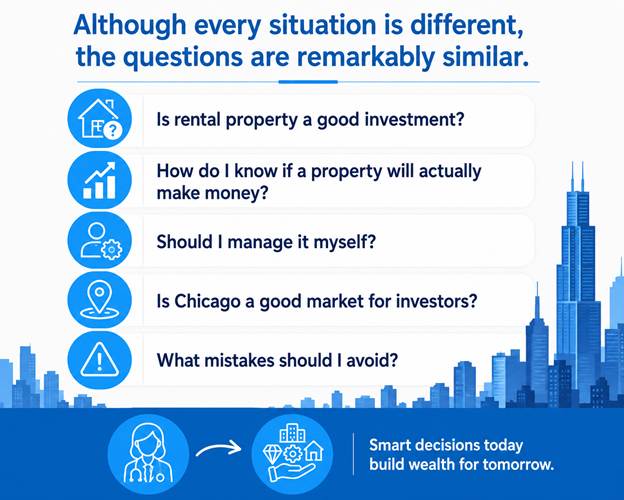
This guide answers those questions.
Whether you're considering your first investment property or expanding an existing portfolio, you'll learn how experienced investors evaluate opportunities, reduce risk, and build a real estate strategy that supports their long-term financial goals.
A Physician's Roadmap to Real Estate Investing
Real estate investing can feel overwhelming when you're just getting started. Financing, taxes, insurance, rental analysis, maintenance, and property management all come with their own learning curve.
The good news is that successful investors rarely try to master everything at once. Instead, they follow a proven process.
This guide follows that same roadmap.
Step | What You'll Learn |
1. Define Your Goals | Clarify why you're investing and what success looks like. |
2. Choose an Investment Strategy | Compare property types and determine what fits your goals. |
3. Build Your Team | Learn which professionals can help you make better investment decisions. |
4. Evaluate Properties | Analyze rental demand, expenses, cash flow, and long-term potential. |
5. Purchase Strategically | Understand what separates a good investment from a costly mistake. |
6. Protect Your Investment | Learn what ownership actually involves after closing. |
7. Continue Growing | Develop a long-term strategy for building wealth through real estate. |
You don't need to become an expert overnight. The goal is to make informed decisions, surround yourself with experienced professionals, and build a strategy that fits your career, family, and financial future.
Is Real Estate Investing Right for You?

Rental property can be an excellent long-term investment, but it isn't the right fit for everyone.
Before looking at listings or speaking with lenders, take a step back and consider where you are in your career and what you're hoping to accomplish.
Early-Career Physicians
If you're still in residency, fellowship, or your first few years as an attending, your priorities may include paying down student loans, building savings, and establishing financial stability.
Some physicians purchase a home during training and later convert it into a rental after relocating. Others decide to wait until their income and financial goals are more established.
Neither approach is inherently better. The right decision depends on your personal situation.
Mid-Career Physicians
As income grows, many physicians begin looking for ways to diversify beyond retirement accounts and traditional investments.
For some, that means purchasing a single rental property that can produce long-term appreciation and supplemental income. Others gradually build a larger portfolio over time.
Late-Career Physicians
As retirement approaches, priorities often shift from growth to stability.
Many physicians begin focusing on predictable income, preserving wealth, simplifying their investments, or building assets they can pass on to future generations.
No matter where you are in your career, your investment strategy should support your financial goals, not someone else's.
From Our Experience
The most successful physician investors we've worked with don't compare themselves to other investors. Some own one rental property for twenty years. Others build large portfolios. Success isn't measured by the number of properties you own—it's measured by whether those investments help you reach your long-term goals.
Why Doctors Choose Real Estate
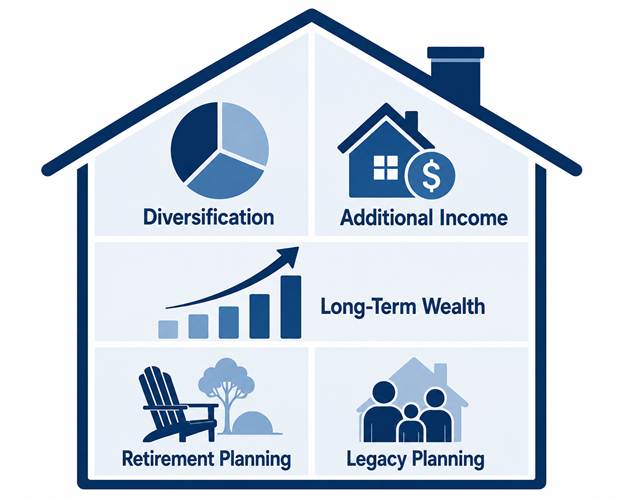
Physicians invest in real estate for many of the same reasons other successful professionals do: to diversify their wealth, generate income, and build long-term financial security.
Investment Goal | How Real Estate Can Help |
Diversification | Add an asset class that behaves differently than stocks and bonds. |
Additional Income | Generate rental income that supplements earned income. |
Long-Term Wealth | Build equity while benefiting from potential appreciation over time. |
Retirement Planning | Create another potential income source after leaving clinical practice. |
Legacy Planning | Build assets that can benefit future generations. |
Real estate isn't a shortcut to wealth, and it's not risk-free. Like any investment, success depends on making informed decisions, maintaining realistic expectations, and taking a long-term approach.
Five Ways Physicians Become Real Estate Investors
Not every physician sets out to become a landlord. In fact, many investment journeys begin unexpectedly.
We've found that physicians typically become rental property owners in one of five ways:
- Purchasing a home during residency and keeping it as a rental after relocating
- Moving for a new career opportunity and deciding not to sell their previous home
- Buying a larger home while converting their existing residence into a rental
- Inheriting investment property from a family member
- Intentionally purchasing rental property as part of a long-term investment strategy
No matter how ownership begins, the fundamentals remain the same. Successful investors evaluate opportunities carefully, plan for long-term ownership, and understand the responsibilities that come with managing an income-producing property.
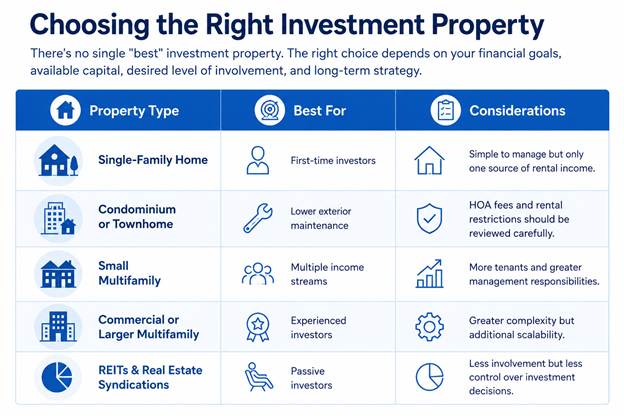
From Our Experience
Some of the strongest portfolios we've seen started with a single well-chosen property. Successful investing isn't about buying the biggest building first, it's about making consistently good decisions over time.
Build Your Real Estate Investment Team
Successful real estate investors rarely succeed alone.
Just as physicians rely on specialists, nurses, pharmacists, and other professionals to deliver the best patient care, successful investors build a team of experts who help them make informed financial decisions.
The right team can help you identify opportunities, avoid costly mistakes, and solve problems before they become expensive.
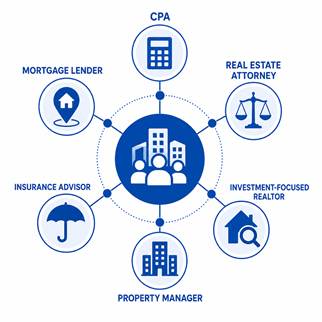
Professional | Why They Matter |
Mortgage Lender | Helps you understand financing options, borrowing power, and investment loan requirements. |
CPA | Provides guidance on taxes, depreciation, entity structure, and long-term planning. |
Real Estate Attorney | Protects your interests during purchases, lease preparation, and legal matters. |
Insurance Advisor | Ensures your investment has the appropriate coverage for rental property ownership. |
Investment-Focused Realtor | Understands rental demand, investment analysis, and neighborhood trends. |
Property Manager | Provides insight into rental values, operating costs, tenant expectations, and long-term ownership. |
One piece of advice we often share with new investors is to talk with a property manager before buying a property, not after. A quick conversation about rental demand, maintenance expectations, or operating expenses can provide valuable perspective before you make one of your largest financial decisions.
How to Evaluate an Investment Property
A beautiful home doesn't automatically make a great investment.
Experienced investors look beyond updated kitchens and professional photography. They evaluate whether a property is likely to perform well over the next five, ten, or even twenty years.
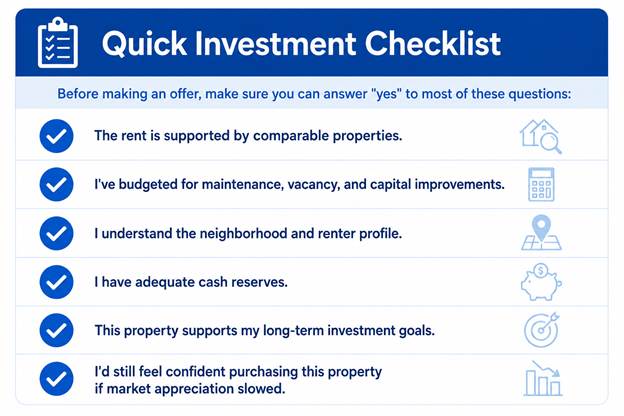
Before making an offer, ask yourself these questions.
1. Is the Location Strong?
Location influences nearly every aspect of a rental property's performance.
Consider:
- Is rental demand strong?
- Are major employers nearby?
- Are hospitals, universities, or public transportation easily accessible?
- Are comparable properties leasing quickly?
- Does the neighborhood show signs of long-term stability or growth?
The right location often has a greater impact on long-term success than the property itself.
2. Is the Rent Realistic?
Don't rely solely on online rent estimates.
Research comparable rental properties to understand:
- Current rental rates
- Days on market
- Vacancy trends
- Features renters value most
Accurate rental projections are one of the most important parts of evaluating an investment.
3. Have You Budgeted for Every Expense?
One of the most common mistakes first-time investors make is assuming:
Rent – Mortgage = Profit
In reality, owning rental property comes with many ongoing expenses.
Budget for:
- Property taxes
- Insurance
- Routine maintenance
- Capital improvements
- Vacancy
- Property management
- Leasing costs
- HOA dues (if applicable)
- Accounting and legal expenses
- Utilities (when applicable)
Understanding the full cost of ownership gives you a much clearer picture of a property's long-term performance.
4. What Major Repairs Are Coming?
Every property eventually needs repairs.
Before purchasing, evaluate the condition and expected lifespan of major systems, including:
- Roof
- HVAC
- Water heater
- Plumbing
- Electrical
- Windows
- Appliances
- Exterior surfaces
Planning ahead is far less expensive than reacting to emergencies.
5. Does This Property Still Make Sense Five Years From Now?
The best investments aren't always the ones with the highest projected return today.
Think beyond the current listing.
Ask yourself:
- Will this neighborhood remain desirable?
- Is rental demand likely to grow?
- Would I still buy this property if appreciation slowed?
- Does this investment still support my long-term financial goals?
The answers to those questions often matter more than negotiating an additional few thousand dollars off the purchase price.
Financing Your First Investment Property
Financing an investment property is different from financing your primary residence.
Lenders often require larger down payments, stronger cash reserves, and different underwriting standards.
Understanding those requirements before you begin shopping can help you focus on properties that fit comfortably within your budget.
There's no single financing strategy that's right for every physician. Some investors purchase one property at a time, while others use equity from previous investments to expand their portfolio over time.
The best approach is the one that aligns with your financial goals and overall investment strategy.
Common Mistakes First-Time Investors Make
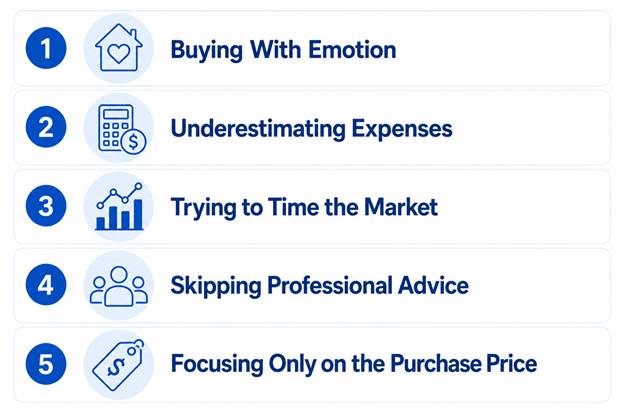
Most investing mistakes don't happen because someone bought the wrong property.
They happen because small decisions were overlooked before closing.
Here are five mistakes we see most often.
Buying With Emotion
An updated kitchen or beautiful finishes don't guarantee a good investment.
Always evaluate the numbers before the aesthetics.
Underestimating Expenses
Maintenance, vacancy, turnover costs, insurance increases, and capital improvements are all part of owning rental property.
Planning for them protects both your investment and your peace of mind.
Trying to Time the Market
Very few investors consistently buy at the perfect moment.
The most successful physician investors we've worked with focus on purchasing quality properties that support their long-term goals rather than trying to predict short-term market movements.
Skipping Professional Advice
A conversation with a CPA, attorney, lender, or property manager before purchasing can help you avoid costly mistakes later.
Focusing Only on the Purchase Price
Purchase price is only one piece of the equation.
Long-term success depends on rental demand, operating costs, neighborhood trends, financing, and ongoing management.
From Our Experience
After helping manage thousands of rental properties, we've found that successful investing is usually the result of consistently making good decisions—not finding the "perfect deal." Investors who ask thoughtful questions before they buy are almost always better prepared for long-term success.
Investing in Chicago: What Physician Investors Should Know
Every real estate market is different.
A strategy that works well in one city may produce very different results somewhere else. That's especially true in the Chicago area, where neighborhoods, rental demand, property taxes, and local regulations can vary dramatically within just a few miles.
For physician investors, understanding the local market is just as important as choosing the right property.
A Diverse Rental Market
One of Chicago's biggest advantages is the diversity of its renter population.
The region is home to world-class hospitals, universities, Fortune 500 companies, and major employers across healthcare, finance, technology, manufacturing, and transportation.
That creates demand for a wide variety of rental housing, including:
- Downtown condominiums
- Historic two- and three-flats
- Small multifamily buildings
- Townhomes
- Suburban single-family homes
Rather than forcing investors into one strategy, Chicago gives physicians the flexibility to choose properties that align with their financial goals and risk tolerance.
Every Neighborhood Performs Differently
One of the biggest mistakes new investors make is thinking of Chicago as one rental market.
It isn't.
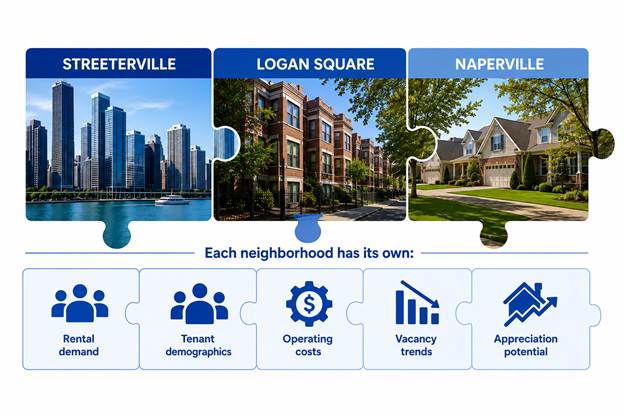
A condominium in Streeterville attracts a different renter than a duplex in Logan Square or a single-family home in Naperville.
Each neighborhood has its own:
- Rental demand
- Tenant demographics
- Operating costs
- Vacancy trends
- Appreciation potential
That's why experienced investors spend as much time evaluating the neighborhood as they do the property.
From Our Experience
We've seen two nearly identical properties produce very different long-term results simply because they were located in different neighborhoods. Buying the right property matters, but buying in the right location often matters even more.
Owning Rental Property Is Running a Business
One of the biggest mindset shifts for first-time investors is realizing that rental property isn't just an investment.
It's a business.
Like any successful business, it requires systems, organization, communication, and financial planning.
That doesn't mean it has to become your second full-time job.
It does mean treating your investment professionally.
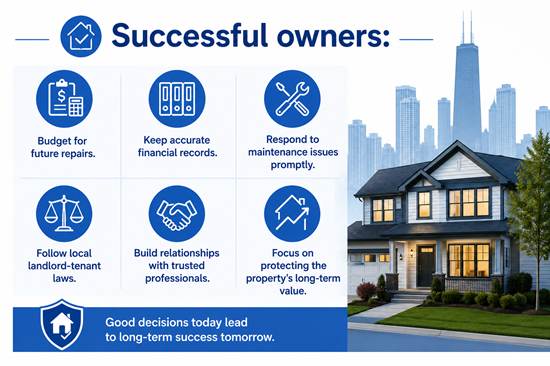
Buying the property is only the beginning.
How you operate it over the next ten or twenty years often determines whether it becomes a successful investment.
Protecting Your Investment
Many investors spend months researching which property to buy.
Far fewer spend time planning how they'll protect it after closing.
Long-term success depends on consistent ownership.
That means:
- Completing routine maintenance.
- Addressing small issues before they become major repairs.
- Budgeting for capital improvements.
- Keeping good tenants happy.
- Reducing unnecessary turnover.
Longer tenancies often mean lower vacancy, fewer turnover costs, and more predictable financial performance.
From Our Experience
One lesson we've learned after managing thousands of rental properties is simple: deferred maintenance almost always costs more. Small repairs rarely stay small for long, and proactive maintenance is one of the best ways to protect both your property and your long-term returns.
Should You Self-Manage or Hire a Property Manager?
One of the most common questions physician investors ask is whether they should manage their own rental property.
The answer depends on your experience, your schedule, and how involved you want to be in day-to-day operations.
Self-Managing | Professional Property Management |
Complete control over daily decisions | Professional oversight of daily operations |
Direct communication with tenants | Tenant communication handled for you |
Coordinate repairs yourself | Established maintenance network |
Handle leasing, screening, and renewals | Leasing and tenant screening managed professionally |
Stay current on regulations | Guidance on changing rental requirements |
Lower direct costs | Time savings and professional expertise |
Neither option is inherently better.
Many physicians successfully self-manage one property. Others choose professional management from the beginning because they value their time and want experienced guidance.
The right decision depends on your goals, not someone else's.
Four Lessons We've Learned From Managing Thousands of Rental Properties
After working with rental property owners throughout Chicago and the surrounding suburbs for more than a decade, a few patterns stand out.
1. Think in Decades, Not Months
Markets fluctuate.
Interest rates change.
Unexpected repairs happen.
The investors who build lasting wealth focus on where their portfolio will be ten or twenty years from now—not what happens over the next six months.
2. Buy Based on Numbers, Not Emotion
Beautiful finishes don't guarantee a successful investment.
Strong cash flow, realistic expenses, and long-term demand matter far more than cosmetic updates.
3. Small Problems Become Expensive Problems
Routine maintenance is one of the best investments a property owner can make.
Ignoring minor issues almost always leads to larger repairs and higher costs down the road.
4. Build Relationships Before You Need Them
The most successful investors already know who they'll call for financing, tax advice, legal guidance, maintenance, and property management.
Having the right team in place makes better decisions possible before problems become emergencies.
Important Items to Note
If there's one message we hope you take away from this guide, it's this:
Successful real estate investing isn't about finding the perfect property. It's about consistently making informed decisions before and after you buy.
As you continue your investment journey, remember to:
- Define your financial goals before searching for properties.
- Evaluate investments based on long-term performance, not emotion.
- Budget for the full cost of ownership.
- Build a team of experienced professionals.
- Protect your investment through proactive maintenance.
- Stay focused on long-term wealth rather than short-term market changes.
Real estate investing is a marathon, not a sprint.
The investors who succeed are rarely the ones who move the fastest. They're the ones who continue making good decisions year after year.
Frequently Asked Questions
Is real estate a good investment for physicians?
Real estate can be an excellent long-term investment for physicians who want to diversify their wealth, generate rental income, and build equity. Like any investment, success depends on purchasing the right property, understanding the financials, and following a long-term strategy.
How much money do I need to buy an investment property?
The answer depends on the property's purchase price, financing, and your investment goals. In addition to the down payment, plan for closing costs, cash reserves, maintenance, and unexpected repairs.
Is rental property really passive income?
Rental real estate can become more passive with strong systems and the right professional support, but every investment property requires some level of oversight. Understanding that expectation before purchasing helps investors make more informed decisions.
Should I manage my own rental property?
Some physicians successfully self-manage their properties, while others hire professional property managers to handle leasing, maintenance, tenant communication, and day-to-day operations. The right choice depends on your available time, experience, and personal goals.
What expenses should I expect?
In addition to your mortgage, budget for:
- Property taxes
- Insurance
- Routine maintenance
- Capital improvements
- Vacancy
- Leasing costs
- Property management (if applicable)
- Accounting and legal expenses
- HOA dues or utilities when applicable
Is Chicago a good market for physician investors?
Chicago offers a diverse rental market supported by world-class healthcare systems, universities, major employers, and a large renter population. Like any market, success depends on choosing the right neighborhood and purchasing the right property—not simply buying in the city.
Should I buy through an LLC?
The right ownership structure depends on your legal, tax, and financial situation. Discuss this decision with your CPA and attorney before purchasing an investment property.
Can real estate help me retire earlier?
Many physicians include rental property as one component of a diversified retirement strategy. Rental income, appreciation, and equity growth can all contribute to long-term financial independence.
Thinking About Investing in Chicago Real Estate?
Whether you're researching your first investment property, converting your current home into a rental, or expanding an existing portfolio, understanding what ownership actually looks like after closing can help you make more confident decisions.
At Landmark Property Management, we've spent more than a decade helping rental property owners throughout Chicago and the surrounding suburbs navigate the realities of owning investment real estate. From evaluating rental demand and operating costs to long-term property management, we've seen firsthand what helps investors succeed over time.
If you're considering investing in the Chicago area, we'd be happy to share what we've learned and help you better understand the opportunities and responsibilities that come with owning rental property.
Learn more about our Real Estate Management for Physicians services or contact our team to start the conversation.

.png)